This Week in WTF, July 27, 2012

– One of the more, uh, creative members of the Texas State Board of Education, Ken Mercer, tries to blame liberals or communists or somebody for changes to the social studies curriculum that he himself made–specifically, the removal of the terms “free market” and “free enterprise.” He presumably figures most people will not actually do the research to see that he is lying, nor will they read anything in the “librul meedeeyuh” that would prove his pants are on fire. He’s right about that, at least (h/t Texas Freedom Network)

– Michelle Bachmann has finally found a way to bring Republicans and Democrats together with her tomfoolery over Huma Abedin, aide to Secretary of State Clinton. I doubt that was Bachmann’s intent, of course, since I have my doubts that she can see the consequences of her own actions more than about thirty seconds into the future. I also haven’t ruled out the possibility that she is actually a cyborg sent back in time from a future America that has already had to endure a Romney and a Palin presidency and derives most of its GDP desperately trying to sell tickets to a nationwide network of creation museums and theme parks to Canadian tourists. If that is the case, I assume the cyborg will be built in China, Japan, or India, because there’s no way we would have the wherewithal to do it here.

Louie Gohmert, Bryan Fischer, and even Rick Warren test the limits of humanity.

Chick-Fil-A. That gets its own post.

Sally Ride was the first American woman, and only the third woman in history, to go to space. She was about as true a pioneer as America is ever likely to have. She could not have served as a den mother, though.

Share

Where the Government Creates, the Private Sector Sexifies

I mean “sexify” in the sense of “make marketable” or “desirable”–“sexy,” to use the parlance of our times. I am specifically referring to the internet. Al Gore did not invent the internet, and he never claimed he did. It was actually a decades-spanning effort of government agencies and private companies with government contracts, gradually building computers and networks that could eventually integrate to create a truly decentralized, global system.

768px-Internet_map_1024

Partial map of the Internet based on the January 15, 2005 data found on opte.org. Each line is drawn between two nodes, representing two IP addresses. The length of the lines are indicative of the delay between those two nodes. This graph represents less than 30% of the Class C networks reachable by the data collection program in early 2005. Lines are color-coded according to their corresponding RFC 1918 allocation as follows:
Dark blue: net, ca, us
Green: com, org
Red: mil, gov, edu
Yellow: jp, cn, tw, au, de
Magenta: uk, it, pl, fr
Gold: br, kr, nl
White: unknown

Many of the essential components of what we now call the internet actually would have been foolish ventures, had private companies undertaken them. Perhaps it was a gamble by the government, but it was a gamble that paid off big. According to Farhad Manjoo at Slate:

In 1960, an engineer named Paul Baran came up with the idea of a packet-switching network. Baran was working for the RAND Corporation, a government-funded think tank, and he’d been looking for ways to create networks that would survive a disaster. Baran saw that the country’s most basic communications infrastructure—especially the telephone network maintained by AT&T—had several central points of failure. If you took out these central machines, the entire network would fail. His insight was to create a decentralized network, one in which every point was connected to every other point in multiple ways—your message from New York to San Francisco would get split into packets and might pass through Chicago, New Orleans, Atlanta, Tampa, or St. Louis. If one of those nodes were taken out, most of your message would get through, and the network would still survive. Continue reading

Share

I shall not let slide this slanderous slut-shaming of sloths!

Hoffman’s two-toed sloths have active sex lives, according to the BBC. MSN Now calls them “slutty.”

More power to them, I say!

Share

This is why you shouldn’t smoke, kids

You shouldn’t smoke, because it’s a bad habit and you set a bad example. In particular, you set a bad example for orangutans.

Via Tecca:

The Satwa Taru Jurug zoo in Indonesia announced that it is launching an intervention for Tori, a 15-year-old orangutan with a smoking problem. The great ape started the habit about 10 years ago by picking up old cigarette butts and imitating the people she saw. After that, zoo visitors began throwing lit cigarettes into her enclosure.

The zoo has decided that it would set additional volunteers to watch Tori’s home and putting up a mesh screen so she cannot reach any cigarettes. She and her mate will soon be moved to an island preserve where she will have even more distance from visitors and possible sources of nicotine. According to The Associated Press, the Center for Orangutan Protection is helping to launch the intervention to stop Tori’s smoking cold turkey and will test how the nicotine has impacted Tori’s health.

Smart ape, asshole visitors. It’s good that they’re getting moved somewhere safer, hopefully where people aren’t quite such…..I mean, who the hell throws lit cigarettes to an ape at the zoo???

Anyway, here’s a video of a monkey playing Angry Birds, sort of.

Share

Why I won’t complain about Magic Mike

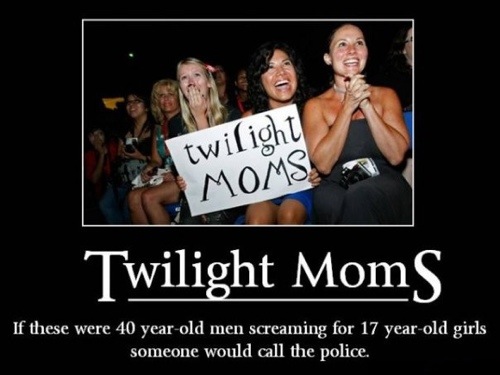
Magic Mike is a movie with a plot (or so I hear), as well as a bunch of buff dudes covered in Crisco. When it came out in theaters a few weeks ago, women started getting together in groups to go see it, and apparently hooting and hollering ensued. Of course, women getting excited en masse about overtly sexualized dudes makes other dudes uncomfortable, and has led to dudes complaining that if dudes did the same thing for a movie about female strippers, people would get all offended.

If there was a movie being released about a bunch of hot female strippers, there is no way straight guys would get away with the kind of consistent excitement that has been expressed via detailed Facebook and Twitter posts, as well as casual conversations. The feedback would be all rolled eyes and “You’re sexist!” comments.

20120722-162438.jpg

This is a false comparison, because there would never be a reason for guys to go en masse to see a movie with hot, buff actresses. There is no point in complaining about Magic Mike, and here’s why: I don’t have to look to find female sexuality and/or nudity, because it is everywhere, and the media brings it to us. I can look anywhere in the whole damn world. “Gratuitous nudity” almost always means female nudity, and frontal nudity is almost exclusively female in mainstream movies. Let’s not pretend that one popular movie with an extensive array of well-oiled pecs somehow upsets this overall balance.

Just one example from the past week is Michelle Jenneke, “The Beautiful Dancing Hurdler.” An animated GIF of her doing some sort of warm-up wiggle dance made Mashable’s list of “Top 10 GIFs of the Week” (BuzzFeed has ten more GIFs.)

She is apparently a very good hurdler, competing for Australia at the 2010 Singapore Youth Olympic Games. I just assumed she popped up on the internet’s radar because of the upcoming Summer Olympics, but she’s not even competing in the Olympics. She’s just really hot.

I hope she does well in her career. By all accounts, she is a very good runner, making her more Maria Sharapova than Anna Kournikova. This is very common in women’s athletics, which tends to focus on the hotties. To use one example from the men’s sports world, David Beckham is a very good soccer (football) player. He is also quite the handsome fellow. When he plays soccer, though, you know what you can’t see? His abs. (A better example might be beach volleyball, where the difference in uniforms between men and women is, uh, striking, but Beckham has good name recognition. In place of Beckham, picture Karch Kiraly if you must.)

Sometime soon (probably during the Olympics), another young hottie will make an inadvertent internet debut. A movie will have gratuitous female nudity. Tabloids will report on how women’s beach bodies are looking (they’ll report on men, too, but in a much more forgiving manner.) Depending what Hollywood learns from the experience of producing Magic Mike, we may not see another overt dudes-on-display movie for a while.

So chill out, guys. You don’t have to make a special trip to the theater to see a T&A parade. Just turn on your TV or load Firefox. The gravy train of boobs will continue for the foreseeable future, probably picking up speed. It may have benefits to society in some way. Eventually someone will unlock unified field theory by studying Kate Upton’s jiggling boobs, and that person will win the damn Nobel Prize.

Share

You are not John McClane. Neither is anybody else.

If only other people in that theater had been armed, maybe this wouldn’t have happened…

This sentiment has made its way around since Friday. For the most part, it is a fantastical load of bull. Here’s why.

Dark theater, loud movie, intense action sequence. Add to that a deranged gunman and a room full of people who were not expecting real gunfire. I have never attempted to shoot a specific person in a crowded theater full of panicked people, and neither has almost 100% of the American public. It sounds prohibitvely impossible. Did I mention that this all occurred in the dark. In. The. Dark.

Experienced Delta Force operators would have difficulty with that sort of situation, I imagine, because once again, no one expected gunfire.

In a crowded, chaotic, dark environment, several questions present themselves. What if you shoot and miss, and hit an innocent bystander? What if you see someone with a gun, you shoot, and you then learn that the person you killed was a fellow CHL carrier, also trying to take the shooter down? What happens when the cops show up? They are, in all likelihood, not going to know that you are a heroic defender of the innocent. They are going to see an asshole with a gun, and it is highly likely that they are going to take you down. They may or may not conclude that you were not an aggressor, but by then you’ll be dead, and the cop who shot you will probably still get a medal.

It is very comforting to think that an armed citizen could have handily taken the shooter in Aurora down, and it is possible that someone with sufficient training and skill could have. The odds are very much against it, and pondering it is really just a comic-book fantasy that we use to make ourselves feel better and to tell ourselves “I would have done it differently.”

David Weigel at Slate looks at the reality of trying to shoot this guy in the context of a darkened, noisy theater filled with what might have been tear gas. He discusses past situations where a bystander did successfully stop a shooter, noting that they all occurred in open spaces and in broad daylight. In a follow-up piece, Weigel talks to Greg Block, a federally-certified firearms safety trainer with twenty-nine years of experience. Block, to put it mildly, knows more about firearms than most people talking about arming the moviegoers will ever, ever know. Block thinks that he, personally, could have gotten the drop on the shooter, but for the fact that it was dark, crowded, and full of disorienting smoke. He says he could have gotten shots off within two seconds. Among anyone reading this, or anyone that anyone reading this knows, how many people could fire multiple accurate shots from a pistol within two seconds of drawing their gun? Again, I can’t say for certain, but I suspect the answer, if not zero, is asymptotic to zero. How many people who want to carry guns in public could even have the reaction time to draw, identify the correct target, and shoot in under two seconds? Very, very few, I reckon. Unless, of course, you are a current or former Delta Force operator.

We stopped being the kind of society that spends a significant portion of its free time preparing for gun battles over a century ago. Do we really want to go back to that? Because that is the only way that arming the moviegoers would have even stood a chance of success, i.e. if everyone had gone in there mentally prepared for battle.

What Happens When Bystanders Have Guns

Two fairly recent stories cast doubt on any guarantee of a happy outcome when law-abiding citizens are armed. Continue reading

Share

Penn State gets hit hard, but is it enough?

The NCAA dropped the hammer on Penn State today. Through a bit of administrative magic, Joe Paterno’s lifetime win/loss record will no longer show any of his wins since 1998. That is 111 fewer wins, dropping his total at Penn State from 409 to 298, and his place in history, for total wins, from 1st to 12th.

The university (and, to some extent, the taxpayers of Pennsylvania) must pay a $60 million fine, to go towards helping victims of sexual assault, and hopefully Sandusky’s victims. The athletic department will be on probation for five years (whatever that means), and they will have fewer scholarships to go around for the next four years. Also, no bowl games.

Current players may transfer their scholarships to other schools. I hope enough of them do so to cause the school’s athletic department, to paraphrase from Romney, to self-death-penalty.

The Big Ten will announce its own decision on punishment for the school later today.

The obvious question is: Is this enough? I freely admit that I am not a sports fan. I enjoy watching games, but I have never gotten caught up in the sort of fanatical devotion to teams, players, and coaches that characterizes much of sports, both here and around the world. Most athletes and coaches (the vast, vast majority, I’d say) are just folks with an aptitude for a particular game. Most fans are folks who enjoy the entertainment, the camaraderie, and (for lack of a less-pretentious term) the esprit-de-corps of being part of a team’s fandom. Some athletes, fans, and coaches, however, let it go to their heads. And some teams get so good that winning becomes more important than anything in the whole world.

Teamwork and camaraderie, both the kind found between teammates and that between fans, is part of the glue that holds society together. Taken too far, though, it becomes the sort of in-group mentality that starts wars. (I’m not exaggerating.) When winning the game, or protecting the team, becomes more important than enforcing the law, there is a problem. A very, very big problem.

SMU lost its entire football program for a year because players were getting paid. Penn State gets fined and loses some of its scholarships for a massive cover-up of child rape.

SMU might have had a famous, legendary coach in the mid-’80s, when it got the death penalty. I have no idea. But even I, an almost-total non-football fan, have known who Joe Paterno was for some time.

The real punishment for Penn State is that, despite keeping its football program, it loses its legacy. Penn State is no longer the home of the greatest football coach in college football history, even if it took the stroke of an administrative pen to make it so.

I still haven’t answered my own question: Is it enough?

The answer is that I don’t know, and even if I did, it is not for me to say. What happens to the Penn State football program from this day forward has no impact on my life at all. Living in a world where winning football games, and protecting the legacy of a legendary coach, is deemed more important than stopping a known child predator–that has an impact on the lives of every person living in the United States today. How we address that is also not up to me.

The question of whether it is enough can be answered by two groups of people. The first group consists of the victims of Jerry Sandusky, and all victims, past, present, and future, of crimes such as his. They don’t have a direct say, however, in how Penn State’s football program, all other college football programs, and all athletic programs will conduct themselves in the future. Will these schools risk their own glory–and the bottom line–to do what is right? Only time will tell.

The second group, which can affect the future of athletics, is the fans. In particular, the fans who defended, and continue to defend, Joe Paterno even after the facts were known. These are the fans who want to preserve JoePa’s legacy and focus on the good he did, as if winning a lot of football games can make up for, in effect, facilitating child rape. Perhaps that is a loaded analysis, but I have yet to hear a compelling argument for why I should care about anything else Joe Paterno did with his life, ever.

To the fans who supported Joe Paterno and Penn State, what happens next is up to you. College athletic programs exist at their current colossal scale because fans buy tickets to games, watch games on television and pay-per-view, buy merchandise, and build whole lifestyles around college athletics. Is the thrill of watching “your” team win worth the cost of looking the other way when crimes are committed? The choice is yours.

Share

The secret policy meeting at Chik-Fil-A headquarters

Quite a few people already knew that Chik-Fil-A is run by some pretty hardcore Christian conservatives. Mostly, it has always just meant that if you want a fried chicken sandwich in a hurry, and it happens to be a Sunday, you’ll have to go somewhere else.

It also means that the company gives money to some big-time anti-gay organizations.

Then, of course, the president of the company discussed how proud they are to be anti-gay. Then a shitstorm ensued, and then the company decided to back off of advocacy on the issue.

It sort of begs the question of how the company made its decision to be so overtly anti-gay. Did they decide that fried chicken is a heterosexual food? I suspect it went a bit like the meeting when Kirk Van Houten (Milhouse’s dad) lost his job in The Simpsons:

Kirk: You’re letting me go?
Cracker Co. Foreman: Kirk, crackers are a family food – happy families. Maybe single people eat crackers, we don’t know. Frankly, we don’t want to know. It’s a market we can do without.
Kirk: So that’s it, after twenty years, “So long, good luck?”
Cracker Co. Foreman: I don’t recall saying, “Good luck.”

Yes, I’m sure it was exactly like that.

Share

When therapists don’t want to do their jobs

Julea Ward and Jennifer Keeton want to be therapists, but they don’t want to help icky gay people because Jesus.

State legislators, purporting to know more about the ethics of these professions than the professionals themselves, want to make it legal to discriminate based on “sincerely-held religious beliefs.” One suspects that it has not occurred to most of them that this could apply to people who don’t think just like them.

If someone who wants to enter into a profession with a duty to help people, but just can’t seem to let go of certain Bronze Age superstitions, I hardly see how that is their patients’ problem, but that is exactly what they want to do. Some of them want to foist their ideology onto patients, but I rather doubt they’d entertain attempts by those patients to present their side of things.

Now, being a good American, I support the right of people to believe whatever crazy crap they want, so long as they don’t hurt other people. And that’s the problem here.

This hurts people.

This really, really hurts people.

So I have a compromise.

If a doctor, therapist, dentist, etc. just can’t get over the fact that the patient in front of them has a sexual orientation that is different from theirs (or some other perfectly-legal activity they just can’t keep from meddling in), they don’t have to treat them.

But the patient doesn’t have to pay them.

And because this rejection is highly likely to hurt the patient, the devout professional has to recommend an alternate professional that they know will treat the patient.

One more thing: in consideration of the fact that the devout professional has clearly wasted the patient’s time, the professional has to pay for the first session with the new professional. Because you have the right to believe what you want, but you cannot foist that upon a person in need who is relying on your professional skill–and if you just have to try anyway, it will cost you. Your professional license is a privilege, not a right.

(Preferably, devout professionals should disclose their prejudices in their marketing materials, but let’s see how you handle this responsibility first.)

If everyone can agree on that, then the Juleas and Jennifers of the world can let their freak flags fly, and the rest of us won’t be quite as bothered.

Share

A Political Proposal

Some people need to meet their presidential candidates in person, perhaps to size them up. Then again it could be a sort of superstitious need for physical proximity, even if only to stand in the same general presence of the candidate, or even just to meet the candidate’s surrogate or representative. The candidate almost becomes a myth, or a totem, sort of like a rabbit’s foot or Jesus. I’m not one to get all riled up over a politician.

These campaign trips get expensive, though, both in the cost to the campaign itself, and through security costs and disruptions to the host cities. They have to provide security, but they also have to give up a significant part of their city to the candidate’s security apparatus.

So I propose a solution. Figure out how much it will cost the city in lost productivity and public services, then cut a check to the campaign for that amount. The candidate can deliver speeches via webcam, and the rest of us can stay home.

I’m totally kidding, by the way. This would be a terrible idea.

Share